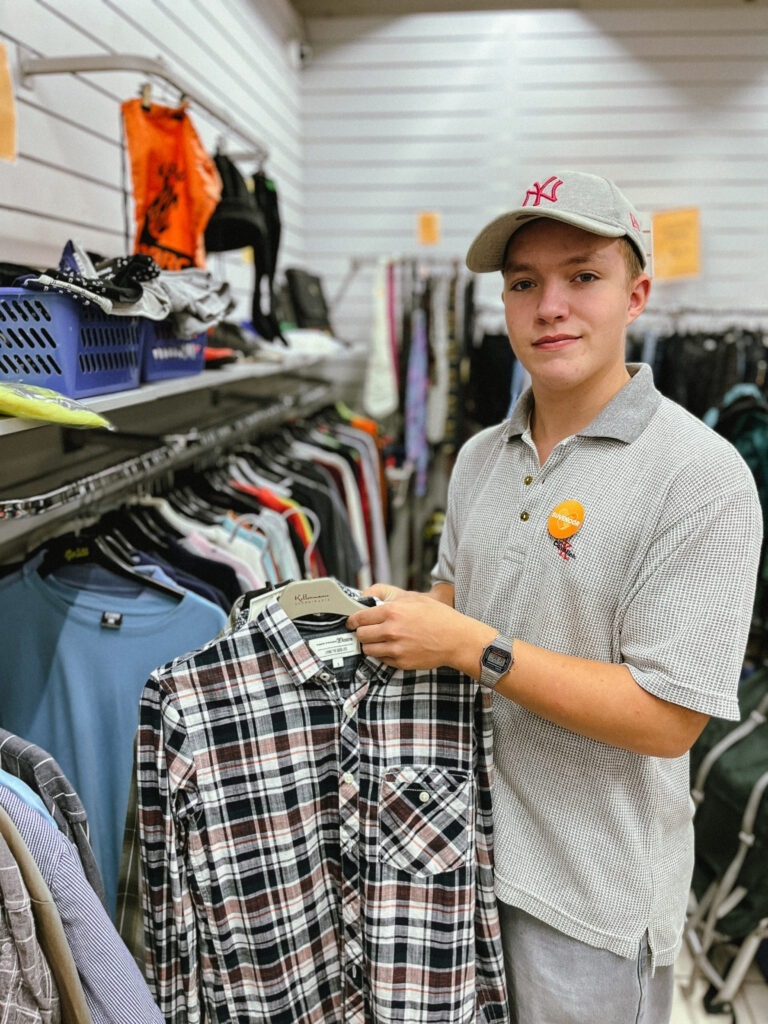
The Upcycling Festival (Uuskasutusfestival) held this May in Tartu brought sustainability in lifestyle and choices into the spotlight. Our closest relationships require the exact same care. Kaisa Põld, a family therapist at the Sõbralt Sõbrale Counseling Center, reminds us that relationships do not deteriorate overnight, but maintaining them requires conscious attention.
Relational patterns develop over a long time, often unnoticed. Minor tensions and dissatisfaction can accumulate like wear and tear on fabric until the problem runs deeper. That is why it is crucial to notice early warning signs and discuss them with mutual respect.
According to Põld, a difficult period does not mean the end of a relationship; instead, it can be an opportunity to grow stronger together. In this sense, therapy is more like tailoring than a one-size-fits-all solution, and its goal is to foster change within a safe environment.
On a practical level, a daily “culture of noticing” helps sustain a relationship: say something kind to your partner, create shared time, and stand by each other’s side, even in front of others. Small rituals, expressing gratitude, and conscious presence provide a strong foundation for any relationship.
Kaisa Põld encourages people to seek help when they can no longer find a way forward on their own. The experience of the Sõbralt Sõbrale Counseling Center shows that relationships can be repaired, provided both partners are willing to do the work.
I do not entirely agree with the claim that relationships nowadays are swapped out like fast fashion. Holding onto and valuing relationships has been deeply important to people in every era. A lot of hard work, conscious effort, and deliberate choices go into them. In fact, according to statistics, the divorce rate has remained relatively stable for at least the last 20 years. We could stand to talk much more about strong, healthy families.
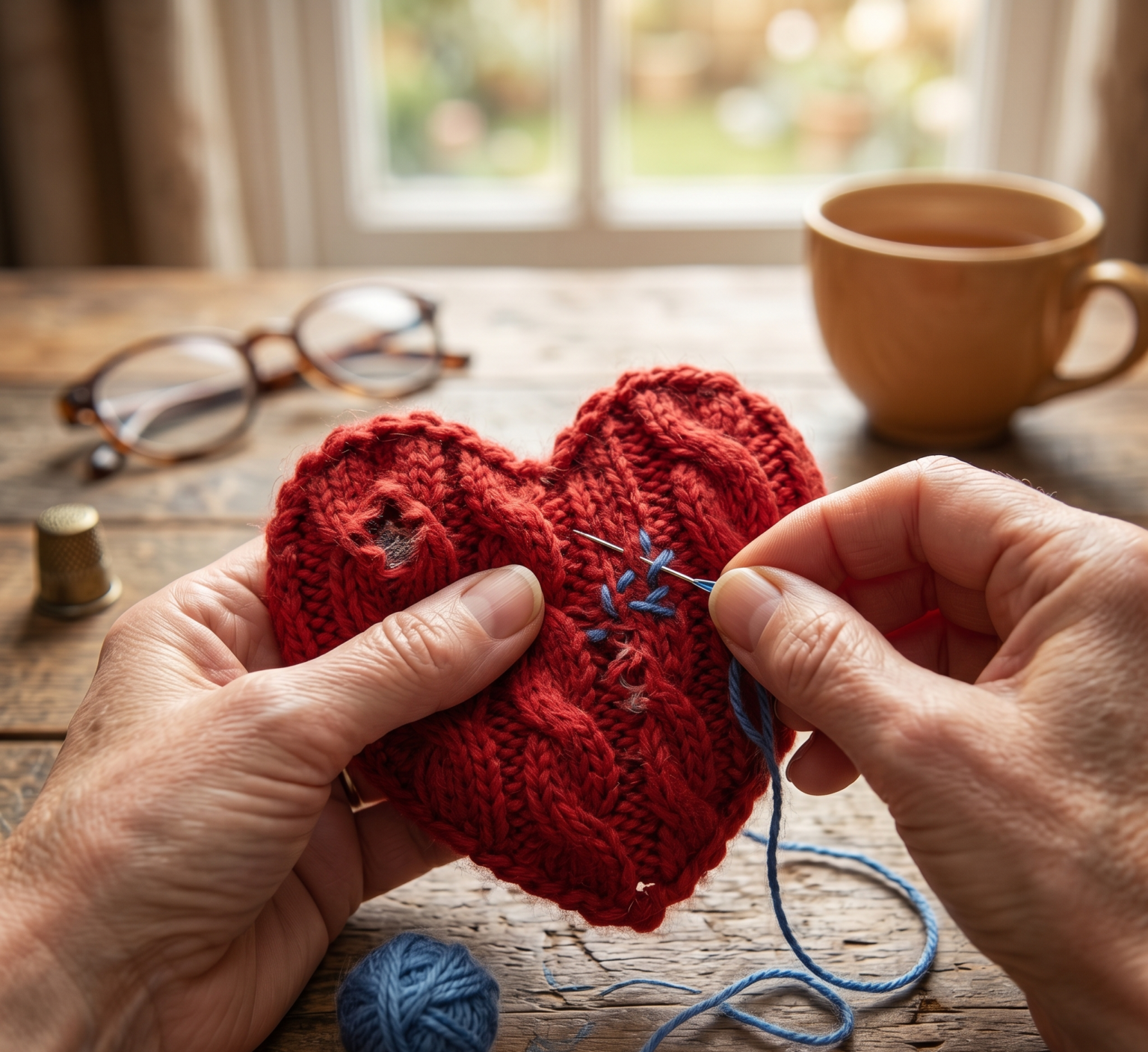
You might not notice the knees of your trousers thinning right away. Chances are, the fabric has been taking a beating for a long time before you notice it is worn down or that a hole is starting to form. It is the same with our relationships. We miss those first signs of wear and tear because they aren’t obvious. The patterns of how we communicate, behave, and react to one another usually form over a long period by repeatedly echoing the same behaviors. A path is worn into the grass when you walk over it many times—a single crossover won’t create a trail. Patterns in our brains, behavior, and relationships form exactly the same way through long-term repetition.
Communication is the most critical and often the most challenging part of a relationship. If I realize I have become dissatisfied, or if something in our relationship bothers me deeply enough to constantly occupy my thoughts, that is precisely the moment to address it—before the “stain” sets in.
Fortunately, the rules are simple:
-
Communication must be respectful: (“You matter to me.”)
-
Listening is just as important as speaking: (“What you say matters to me.”)
-
The ultimate goal must be greater closeness: (“I am willing to make changes for the sake of our relationship.”)
The goals of entering therapy can vary wildly, and therefore, so do the methods used. For one person or couple, therapy might truly be like a “gentle handwash to remove a small spot,” while in another case, they might go through a “powerful spin cycle.”
Because every individual and family history is so unique, a therapist’s work is akin to custom tailoring rather than assembly-line production. Therapy does not always have to be pleasant or comfortable for a person, but they must feel safe enough to endure the discomfort and pain, keeping in mind that the ultimate goal is positive change.
I want to strongly encourage everyone—while we at the Sõbralt Sõbrale Counseling Center might have varied skills as “real” tailors, as therapists we are highly experienced and have encountered a vast range of relationships and issues. We are ready to wash out stains, sew up holes, and apply patches. Give your relationship a chance to heal and utilize support if you are at all ready for it.
Long-term relationships that have settled into a routine can sometimes be labeled as “worn out,” and admittedly, that word isn’t very attractive. But as you know, vintage is very much in style. The benefits of a relationship that has achieved vintage status are things we rarely hear about: a sense of security, certainty, peace, mutual understanding, a shared worldview, and the shared memories and traditions that hold us together—not to mention shared children and grandchildren.
If there were a “care manual,” my wish would be for every person in a relationship to practice noticing their partner’s good and lovable qualities—and to voice them out loud and clear. I wish people would consciously realize that a relationship is constantly shifting and changing like the seasons. A difficult period in life does not signal the end of a relationship; it represents a profound opportunity to emerge from the “spin cycle” stronger as a couple.
A relationship that has lasted one year is different from one that has lasted five, ten, or more years—and it should be. If a couple celebrating their golden wedding anniversary bickered over the exact same topics as newlyweds, it would be a rather sad story, as if nothing had been learned along the way. Another person is like a goldmine, filled with immense treasure. A single lifetime isn’t enough to uncover it all, but I recommend approaching others with this exact mindset (and this applies to anyone—a spouse, a friend, or a colleague).
Three Practical Tips
Commit to just ten minutes of sharing time a day, shared rituals, and expressing gratitude:
-
Acknowledge something positive: Express at least one nice quality or kind action of your partner every single day.
-
“Tuesday Tea Night”: Establish a sacred time for just the two of you that you never skip, using it to share important thoughts that have otherwise gone unspoken.
-
Present a united front: Always stand by your partner in both words and actions (in front of the children, the in-laws, and others).
No related posts.