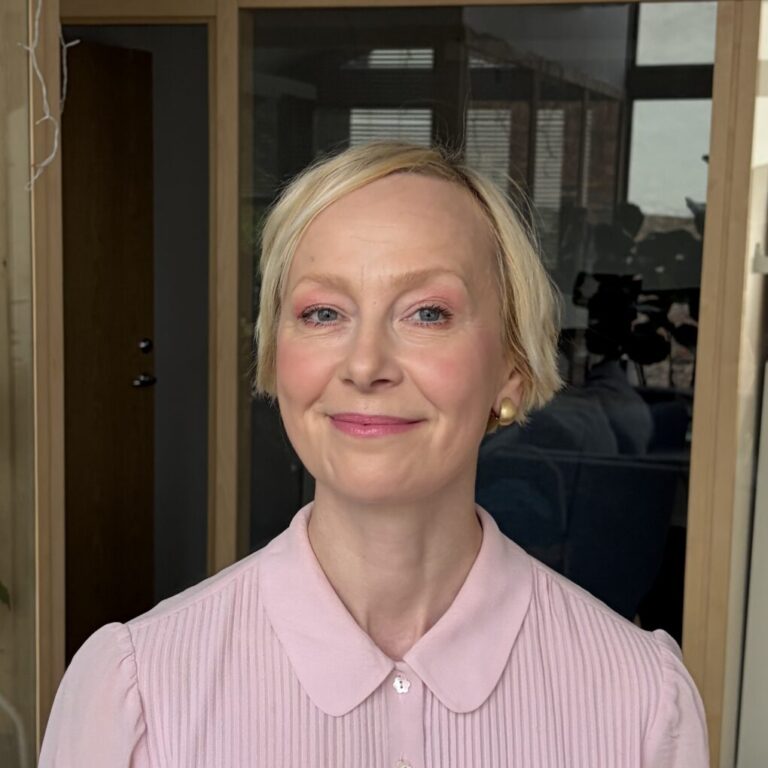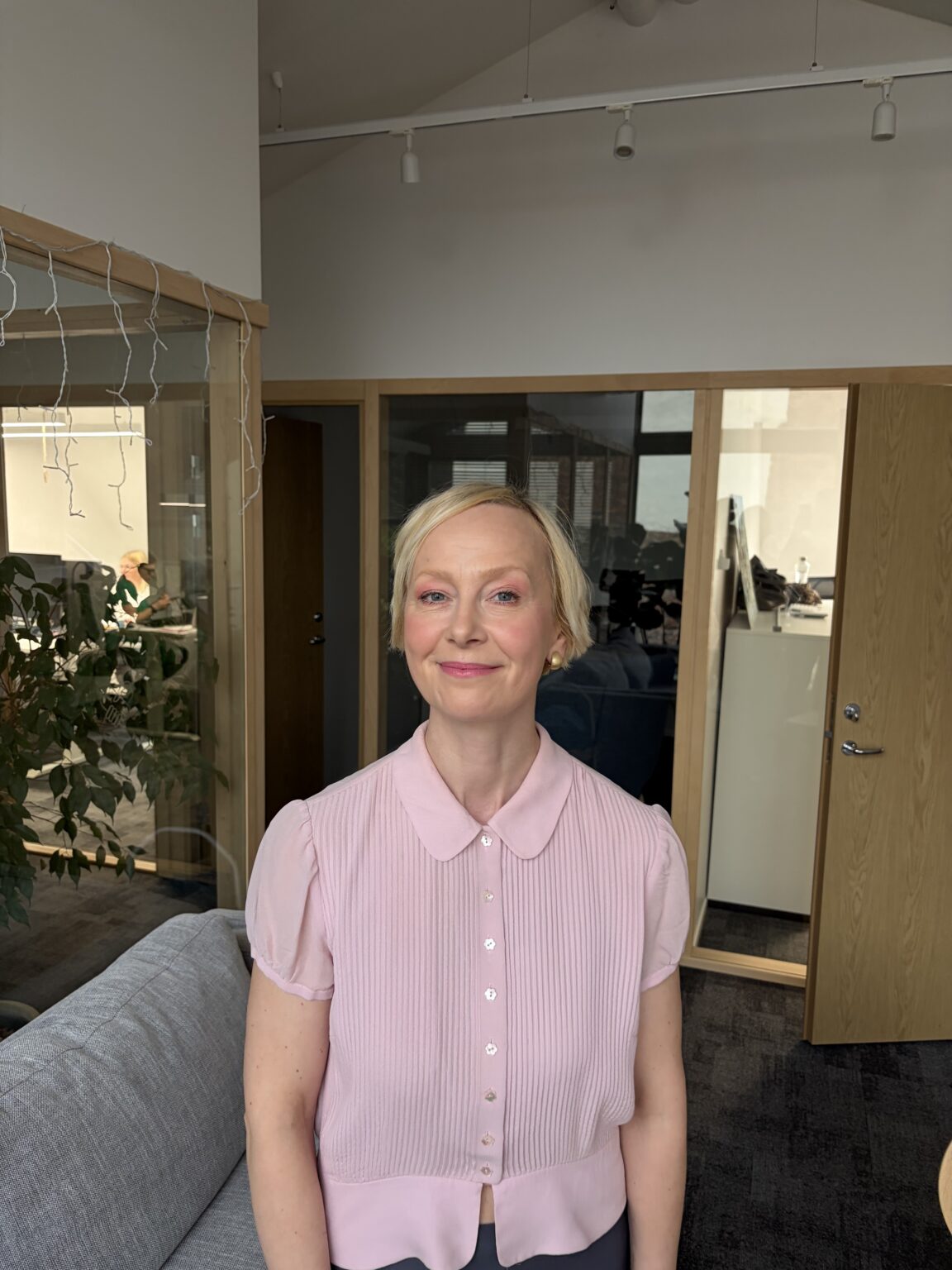
Piret Pärna joined us as Logistics and Process Manager at the beginning of June. Welcome! Piret was interviewed by our Sales Manager Maiko Kesküla.
You have worked on projects at BP Shipping in the UK where you had to fix 1,300 documents. After that, does managing a supply chain feel like a peaceful walk in the park or a major adventure?
Rather like a peaceful walk in the park.
As an experienced thrift store expert and a regular Sõbralt Sõbrale customer, what do you think works well for us, and what bothers you?
From a customer’s perspective, what works is that we have furniture and high-quality items from Sweden. As a customer, I really like the large Sõbralt Sõbrale stores where the entire selection of goods is visible.
How does the Estonian second-hand market differ from the UK market?
The Estonian second-hand market is relatively small and operates more as a circular economy service tied to social entrepreneurship. In the UK, the market is large, highly professional, and has a heavily commercialised charity and retail sector. Second-hand shopping there is a mainstream part of consumer culture. The tradition of charity shops in the UK has lasted for decades, with major organisations like Oxfam, the British Heart Foundation, and Cancer Research UK managing hundreds of stores across the country.
Naturally, the price level is lower in Estonia, whereas in the UK it is higher, especially for vintage items. Online stores are highly developed in the UK, while in Estonia it is still a growing distribution channel through platforms like Yaga and Vinted. The inventory selection in Estonia is more inconsistent, whereas in the UK it is vast, with a higher volume of quality donations—especially in London, as is typical for major cities. In Estonia, a second-hand shop is still often seen simply as a place to get necessary items cheaply. In the UK, many charity shops have transformed into almost “vintage boutiques,” where prices can be quite close to retail prices for new products. This is driven by high demand, the influence of online resale markets, and a desire to generate more revenue from donations to fund their larger missions, such as cancer research for Cancer Research UK.
Your CV brings together completely different worlds: sportswear, shipping, interior design, procurement, HR, refugee aid, and now charitable recycling. What links them all together for you?
Infant psychoanalytic therapy and the field of mental health are actually missing from this list—I studied that at the Tavistock Clinic in London—as well as quality management. What connects these fields are the different facets of my personality, which accommodate a passion for order, system building, design, children, psychology, kindness, spirituality, and supporting the vulnerable.
What did you bring back with you to Estonia from British work culture?
Most of all, the realisation that politeness is vital and that small talk isn’t meaningless chatter to be avoided; it is an opportunity to show respect and interest in another person and to build relationships. People invest more in professional relationships there.
Politeness also means that positive feedback always comes before criticism or negative remarks. You don’t have to immediately pour negativity and criticism over someone. In Estonia, one can get the impression that a lot of things are going poorly—but that is only because the good things aren’t talked about as much as the bad. Politeness also involves a greater need for consensus.
Of course, politeness and the more indirect, softer communication style that comes with it sometimes led to situations where you couldn’t be sure of anything. For example, when a task needed to be done, instead of assigning it to someone specific, people would say, “We should complete this by next month.” It remained unclear who was actually supposed to do the work and who exactly “we” was.
Let’s talk about systems and structures. What role do they play for you, and how do you construct them in your mind?
I strongly dislike it when I am not given the chance to see the bigger picture—when I am fed only a specific detail and have no way of understanding why it is necessary or where it fits within the system. I approach almost everything from a systemic view, where details are crucial. This is often a heavy burden to carry at the beginning, as a lot has to be thought through and it takes time. However, in the long run, it saves resources and increases efficiency across the board. A system helps me manage my limited attention span and memory, and it reduces the need to constantly rely on pure willpower. A system frees up your focus.
The most critical step in building a system is establishing exactly what problem we are solving and what the objectives are. Only then can you find the ways to achieve them. For systemic improvement, the Deming model—the PDCA cycle: plan, do, check, act—works incredibly well.
Who or what wakes you up in the morning?
My phone or my daughter.
What have you inherited from your ancestors?
From my father: thoroughness, a love for order, discipline, a love for sports, the ability to see both the system and the detail, a love for education and learning, and music. From my mother: creativity, a desire to dance, a love for cooking, and a sense of beauty.
Are you someone who immediately sees the big picture, or do you first notice the one misaligned label on a box?
They usually appear simultaneously. I see a detail or a symptom, and an entire larger grid immediately begins to unfold around it.
With your CV and international experience, you could work anywhere. What was it about Sõbralt Sõbrale that captivated you?
Sõbralt Sõbrale is my passion! As a customer, I have made excellent purchases from our stores over the years. I even remember our very first store in a basement in Annelinn, Tartu, which had goods from Sweden—high-quality and fascinating.
I was captivated by the opportunity to develop a supply chain and circular economy system within a charitable context. And from the very beginning, I have truly loved the atmosphere and culture here—supportive and benevolent, yet professional.
How do you look after your mental health, and how important is spirituality to you?
Spirituality is very important to me. People usually realise the importance of good mental health through crises. For me, it is deeply connected to stress management (see the question about stress below) and giving meaning to my life and actions.
Which wolf do you feed inside yourself, and which one do you wish to starve?
I want to starve the wolf that tries to do everything and fails to notice the boundary where the price to pay becomes too high.
I feed the wolf that wants to follow a healthy lifestyle, be joyful, and understand what truly matters in life—kindness, good health, and the pure joy of being.
How do you plan to be of service to others?
Through my diligence and systemic approach.
How do you cope with stress?
By reducing the sources of stress, and if they cannot be reduced, by dealing with them quickly and consciously. For example, I try to tackle tasks with a negative undertone on the first attempt; I try to avoid procrastination because it drains additional resources. Dealing with the same issue multiple times means experiencing that negative emotion multiple times.
In parallel, I try to support myself so that I have the energy to carry the stress—by prioritising what matters: finding joy in my daughter and parents, connecting closely with friends, working out, staying active, getting enough sleep, drinking water, eating healthily, dancing, creating beauty in the garden, and tapping into other sources of positive energy. (A quick tip: there is a pressure point right between your eyes; pressing it can lower cortisol levels in just 30 seconds.)